Power flush
What to send first
- 1
How many radiators are in the property?
- 2
What are you noticing: cold spots, black water, noise or slow heat-up?
- 3
What make is the boiler, and is a new boiler being planned?
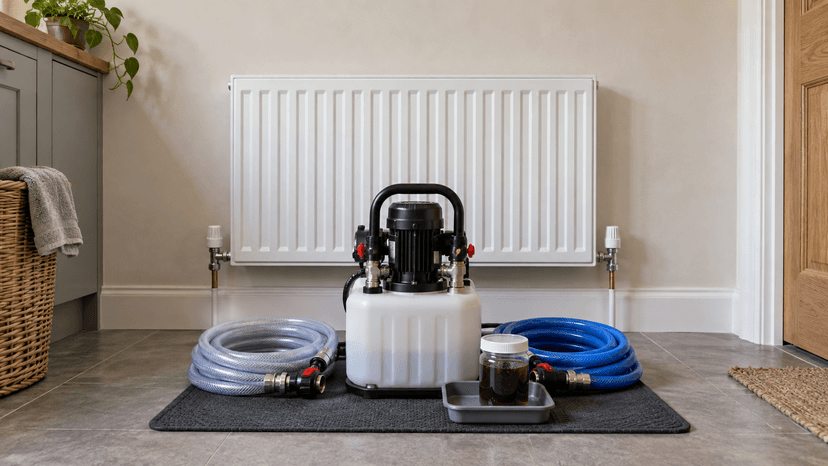
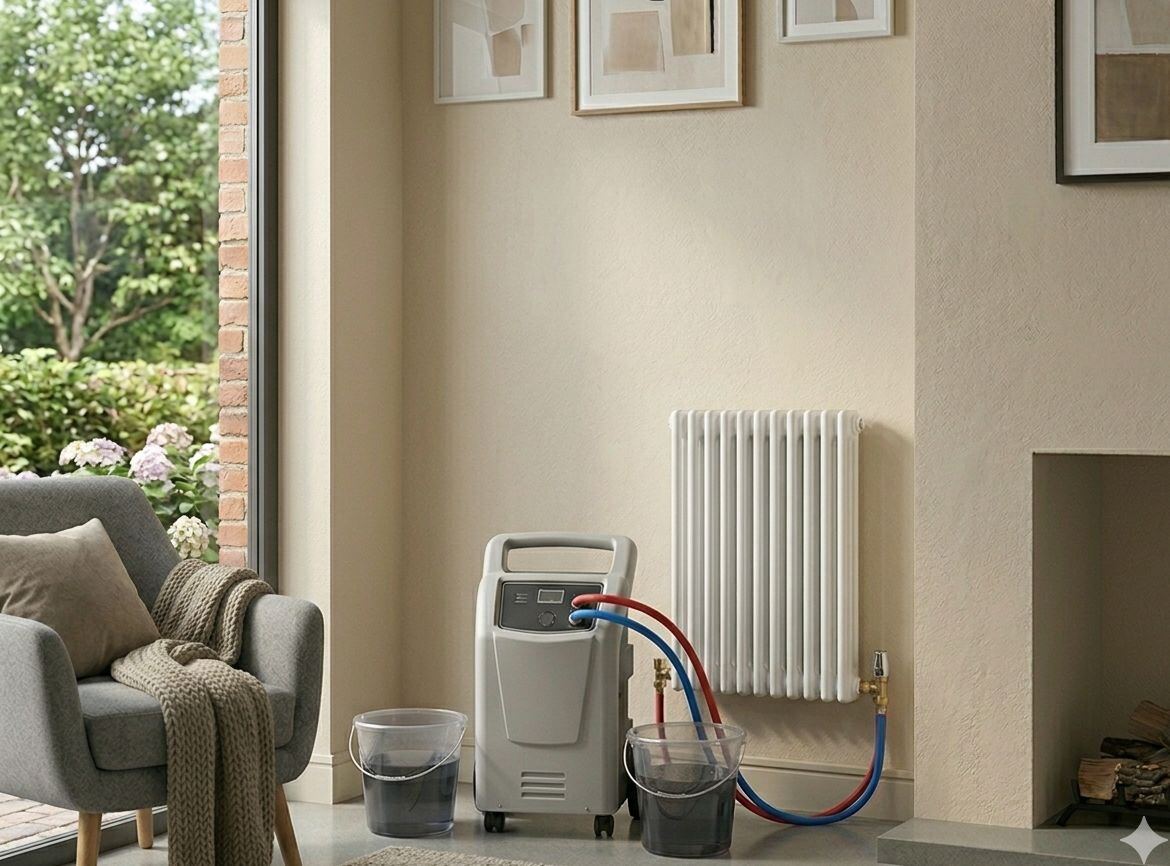
Over the years, central heating water picks up rust and sludge. It settles in the bottom of radiators, clogs pipes and makes the boiler and pump work harder. A power flush pushes water and cleaning chemicals through the system at a high flow rate to lift that sludge out.
Signs your system needs a flush
Radiators that are cold at the bottom but warm at the top, black water when you bleed a radiator, a noisy boiler, or heating that takes ages to get going are all common signs. A flush is also often done before a new boiler goes in, so dirty water does not damage it.
How Andrew does it
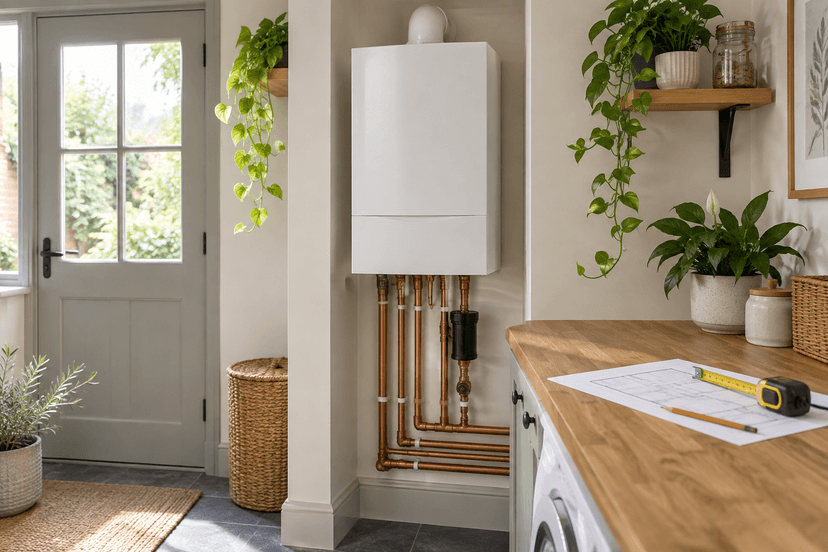
He connects the flushing machine to the system, works through each radiator in turn until the water runs clear, then refills with inhibitor to protect the system. He can also talk to you about fitting a magnetic filter to catch debris in future. If the clean shows up a worn pump or valve, that can be put right under heating repairs.
Frequently Asked Questions
Contact
Or call us on 07801 988752